

Why is a positive user experience important?
A trouble-free, pleasant, and coherent user experience is the foundation for the success of digital marketing strategies. At the heart of this is a user-centric UX design that meets the needs and expectations of website visitors.
The benefits of an appealing user experience:
- promotes trust
- underlines credibility
- boosts lead generation
- increases the duration and frequency of website visits
- Increases conversion rates
- makes users more receptive to marketing messages
- has a positive effect on SEO
A good user experience shows its effect in multiple ways: low bounce rate, better customer acquisition, and more referrals.
Important to know: UX design is not static, but a living concept – regular optimizations are crucial for success. The necessary know-how is provided by the online marketing agency ONELINE.
These 6 UX mistakes worsen the user experience.
Fixing existing errors is good. It’s best to avoid them in the first place. For this proactive approach, the following list serves as a handy guide. It includes common problems in the UX design concept that negatively impact the user experience.
1. ignoring the needs of the user
There are numerous tools available in digital marketing that provide deep insight into website visitor behavior. The key is to use this data to refine the user experience.
Powerful software can point out stumbling blocks in the user experience. This information is essential to making visitors’ interactions with the website smoother.
In addition to the data-driven approach, it is helpful to look at the web presence through the eyes of the users. Their needs should be central to any design decision.
2. accept a mismatch between functionality and aesthetics.
A website should be visually appealing and function smoothly. In practice, the relationship between these two aspects is rarely balanced. If there is an imbalance, it affects the user experience.
What do visitors hope to get from clicking on the website? Only those who know the expectations of users can align the UX design accordingly. The desired information should be easily accessible and visually in focus.
It is important not to get lost in the aesthetic design of the page. The quality of the user experience also depends on the technical functionality of the page.
3. overlooking important intermediate stages
All website owners pursue the goal of getting the visitor to take a predefined action. This can be buying a product or signing up for the newsletter.
Often, ample attention is paid to designing the start and end points of user interaction. For a trust-building UX design, it is important to optimize every moment of the user experience.
An unfilled required field in the form, a connection failure, or a system error – the user interaction doesn’t always go smoothly. It is important to include these intermediate stages in the design concept.
4. underestimate the interplay between content and UX.
The impression a website leaves on users also depends on its content. A typical mistake is to create the texts independently of the design. In this way, content and design are often at odds with each other.
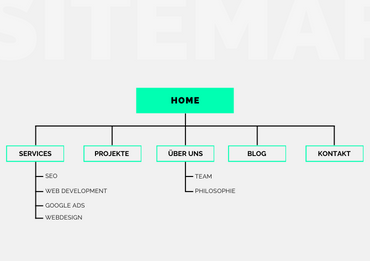
Wireframes are a good help to coordinate both aspects. They visualize the planned concept and help content creators to place the texts optimally.
5. Blindly following every trend
Users appreciate websites with a contemporary design. This tempts many operators to pick up every innovative idea. However, this only contributes to a limited extent to a positive user experience.
If you want to incorporate a current trend into the UX design, you should keep the benefit for the visitors in mind. In addition, a distinction should be made between short-lived trends and long-term developments.
The needs of visitors should take precedence over the website owner’s desire to be part of every wave.
6. abandonment of responsive design
The majority of today’s users use a mobile device to browse the Internet. Yet, many website owners underestimate the importance of responsive design. Not only does this negatively impact SEO rankings, but it also detracts from the user experience.
If the page does not automatically adapt to the visitor’s device, the content is displayed incorrectly. Depending on the layout, large open spaces are created or graphic elements become distorted.
The quality of the user experience stands and falls with the responsiveness of the website. If it adapts flexibly, all visitors enjoy the same optimized experience.
With a good user experience to lasting success in digital marketing
All effective marketing strategies have one thing in common: they are made up of many small cogs that mesh together perfectly. One of them is UX design.
An excellent user experience gives website visitors a consistently positive experience without bombarding them with information or misleading them. The golden rule is to ensure a perfect interplay between functionality and aesthetics.
What criteria make up good UX design changes over time? As an experienced online marketing agency, ONELINE helps interested partners to always align the user experience of their website with the current principles of success.