


General in advance
The term “omni” stands for “everything”. Omnichannel therefore represents a concept that takes into account cross-channel and linked customer communication.
To put it simple: the touchpoints with the company should always feel the same to the customer, regardless of whether they are digital or analog. A lot of work. his first impression dominates among the vast majority. However, this assumption is less in line with reality.
Companies that neglect the use of QR codes in omnichannel generate less customers, business partners as well as interest reach than companies that use this marketing tool skillfully.
For this reason, ONELINE explains the benefits of using QR codes in omnichannel.
Why a QR code takes an important role
The abbreviation QR stands for quick response.
QR codes can be found just about everywhere:
- Flyer
- Beverage cans
- Menus in restaurants
- Magazine ads
- Museums
- The bus schedule at the bus stop
- Advertising posters
Why are QR codes growing in popularity? The answer is simple: they’re effective. Customers first interact with a corporate brand offline before going online. All thanks to the QR code.
Versatile. This term also describes a QR code extremely aptly.
Users who scan a QR code not only receive information about the respective company, product or service.
They can instead use the scanning process to call a phone number directly, send an e-mail or download contact data to their phone. In practice, however, other QR codes enjoy great popularity.
A QR code with monetary rewards attracts customers
The graph below illustrates which type of QR code is the most popular.
Shopping coupons motivate users to scan the QR code. This is immediately followed by cash-back programs and “more information about the product”.
The key is to use the QR code correctly in an omnichannel environment.
Due to their adaptability, QR codes harmonize with omnichannel marketing
Nowadays, well thought-out omnichannel strategies secure a company’s existence. Regular customers and potential new customers like to find out about products or special offers via all channels.
Customers also want to be able to contact the company quickly and easily – ideally throughout the entire customer journey.
Customers are now more mobile than ever. This is why they frequently switch between channels or devices.
This seems convenient, but there is an underestimated risk: media disruptions can occur, resulting in a loss of information. In the worst case, this can result in losing customers.
“Imagination is more important than knowledge“
Albert Einstein’s quote “Imagination is more important than knowledge, because knowledge is limited” influenced not only the generations of that time, but also the generations to come.
This realization also applies to the use of a QR code. Companies can place these two-dimensional codes anywhere. There are hardly any limits for this small but effective marketing tool.
QR codes enrich social media posts, harmonize with web design and look good as a printed version as well. Any limits for the QR code? No such thing!
The key, however, is to use QR codes as part of a meaningful omnichannel strategy.
How does the use of a QR code work in actual practice?
The following graphic illustrates which QR codes users frequently scan:
Companies use QR codes to gain ground in influencer marketing. They provide the code and invite users to scan the QR code with the phrase: “Scan the code for deals and offers”.
This allows users to instantly connect with the business with just one scan; via Instagram or Twitter. Convenient, fast and time-saving.
Another way to use QR codes is in an event planning. Department stores, every now and then offer music festivals to attract more customers.
They therefore ask the promoters to print a QR code on the tickets or brochures. If potential visitors scan the code with their smartphone, they land on a website. This establishes a relationship between the festival and the department store.
This is where they will ideally find all the important information they need. This page acts as an encouragement to visit the department store and benefit from a discount if they show the ticket stub.
The close connection of a QR code with omnichannel
Multi- as well as cross-channel marketing once dominated in practice.
Multi-channel marketing refers to different channels.
Cross-channel marketing connects the different channels with each other.
Omnichannel marketing is an advancement of the two variants. In addition, it adapts to the conditions of the digital age with the help of QR codes.
Customers now have high expectations: they want to learn about an offer in the store, search for information on the website. Order the product online, clarify questions via customer chat, the customer hotline or Facebook.
Under one condition: The quality must always be guaranteed. Omnichannel not only meets this requirement, but also acts as an important tool for lead generation.
Sales opportunities increase because users move unnoticed from channel to channel: all thanks to optimal networking.
Media breaks? Not a chance! Or at least with optimal omnichannel marketing. Both a change of device and different communication channels no longer get in the way of the user experience.
QR codes serve as an impeccable tool in omnichannel marketing
When a customer scans the QR code of a product on a brochure, they will be taken directly to the website using their smartphone if they wish.
The customer takes a closer look at the product in the online store before possibly saving it to his or her notepad.
At home or in the office on the desktop, the customer remembers the product.
Via the notepad they add it to the shopping cart to complete the ordering process.
Since he has a question, however, he decides to get in touch with the customer chat.
Customer service immediately sees what the order is about and can answer any questions within a few minutes.
If further questions arise and the customer asks them by e-mail, the customer service answers them seamlessly.Customer service does not require a new explanation because it can review all information immediately.
What are the challenges of QR codes in omnichannel marketing?
The high channel and communication diversity works under one condition: Transitioning from channel to channel should always be an option for users, not an obligation.
They should not find the change unpleasant. In order to achieve a high level of lead generation, it is worthwhile to address customers in a personalized manner.
Potential customers associate appreciation with a direct approach. This counts as one of the human needs.
Omnichannel increases customer satisfaction
- Higher lead generation
- Higher sales through customer recommendations
- Reduction of service costs for customer support, through chats or e-mail instructions
The 8C omnichannel approach according to Roland Berger includes the success factors for becoming a customer journey champion. This model includes the following eight factors:
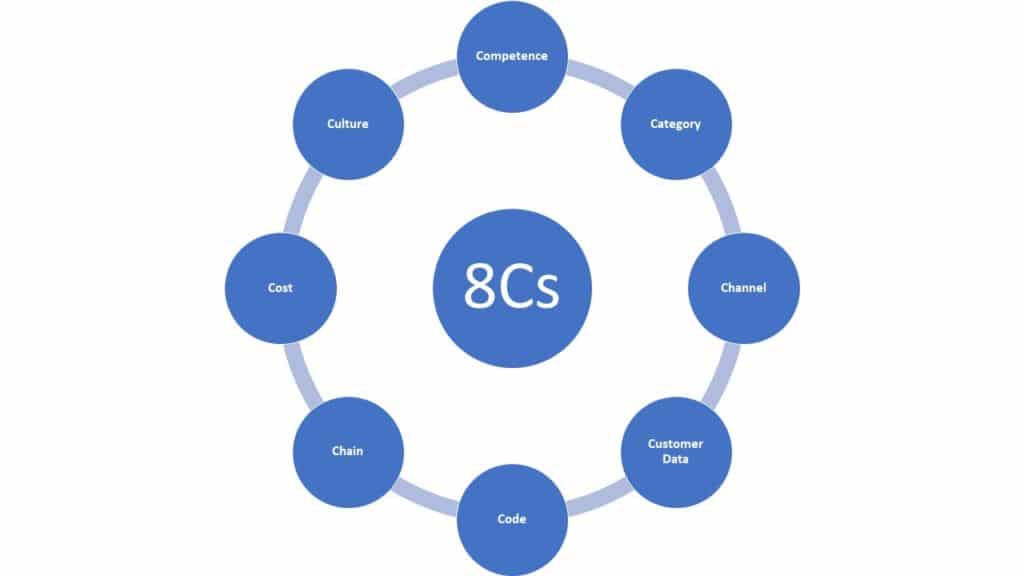
Here, the QR code serves as an important offline link to set users’ activities in motion online.