


Does Google enjoy monopoly status?
88 per cent of all search queries take place via Google, although other search engines such as Bing, Yahoo or Ecosia exist. Google’s popularity is related to the standard contracts it has signed with numerous software and phone manufacturers. A large majority accepts the search engine without ever asking themselves whether Google actually provides useful information. There are indeed indications that prove whether a page is secure. This includes, for example, the lock at the top left of the web address. Nevertheless, readers receive no information about whether the content provided meets their requirements. Google merely gives the impression of being the best search engine. Free, fast and simple. That always goes down well with users. And rivals like Bing, Yahoo or Ecosia do not have the same amount of information to keep up with Google. This is a big disadvantage in today’s technology age, where SEO and information play a key role.
Ecosia has less information, but users help reforest forests with every search. Users who prefer this environmentally friendly search engine help plant trees in the most inhospitable areas of the world. Even if other internet services like Ecosia contribute to an increase in sustainability, they do not prevail against Google. In online synonym dictionaries, Google even acts as a synonym for the term search engine. Web designers and companies that deal with search engine optimisation thus specifically adapt to the requirements of the internet service. SEO is the English abbreviation for Search Engine Optimisation. Google enjoys a monopoly status not only thanks to the numerous contracts with computer, tablet or smartphone manufacturers. But also because the internet giant contains the most information. But that does not mean that the information content is of high quality.
Why companies focus on search enginge optimisation
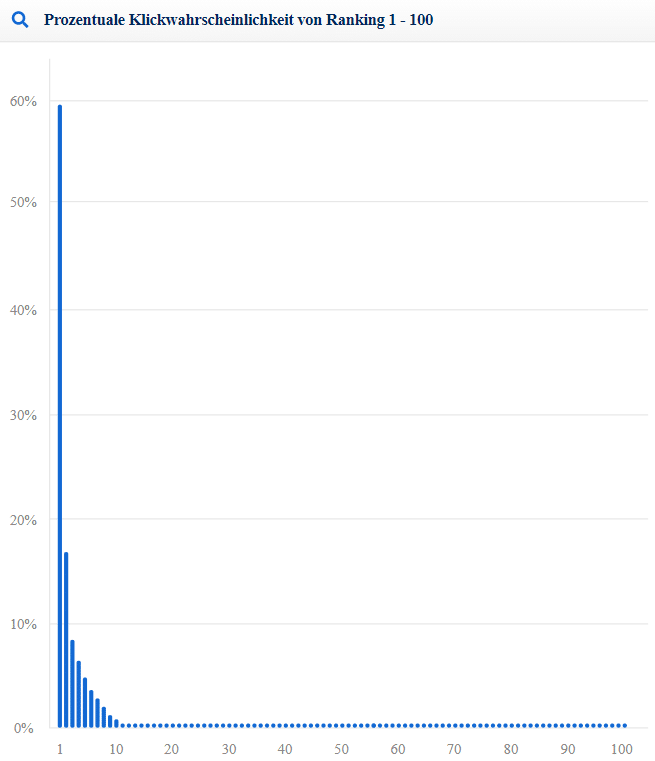
Companies and private website operators come into contact with SEO because they want to be found in relation to their subject matter. Preferably among the top 3 organic hits. Most users do not scroll further. Therefore, SEO plays an important role for website operators. They deal intensively with Google’s ranking factors. Because only if they know the requirements of search engine optimisation, they take on the role of a full hit. Businesses, associations or individual entrepreneurs adapt their websites to Google’s ranking factors. ONELINE, your analytical SEO agency is happy to support you in search engine optimisation.
In recent years, many changes have taken place in this regard. Not only has the information provided changed, but also the type of search. The keyword is: voice search. It provides the proof why Google is so popular with users, without them ever questioning the quality of the information provided. Google is super simple, intuitive and fast. And yet they exist – the critics who complain about this giant and expose its weaknesses.
Is Google letting its users down?
Wayback Machine is the name of the traitor that mercilessly exposes the unsightly changes made by search engines in recent years. Google gives ads a bigger place than the desired organic search results. Tragically, numerous internet sites once again lead to Google’s own website. Users end up on Google Maps or YouTube. The internet giant profits from this approach. After all, it collects more data and places even more ads. Nevertheless, critics do not deny that Google still provides useful results. Besides, the company’s employees are among the most creative minds in the world. Innovation is their daily bread: Google implements more than 3,000 improvements a year.
Camera search is one of the improvements that enjoys a high reputation among users. Nevertheless, there is a grain of truth in the claim: Google buries optimal results when it pays off financially. In this respect, the internet company behaves like an insurance agent who sells insurance in order to collect a commission. Although he knows that this does not apply to his clients.
In 2000, users did not have to scroll far down when they typed the term ladies’ trousers into the search box, for example. The first result corresponded to the search request. Furthermore, it was an unpaid search result. In 2013, things already looked different: the unpaid result was further down and no longer in first place. 2020 looks like a downfall compared to 2000: Users have to scroll even further down to click on their preferred result. This year, paid ad and shopping results that are on the right side are winning.
Featured Snippets
Experts who study search engine change have analysed how far below the search box the answers land. At 375 pixels below the page was the search result link. Thanks to the numerous, paid ads, this has changed over time. 2020 serves as proof of this change, because there the value is 616 pixels. Although there are drawbacks to the aforementioned changes, Google rock-solidly claims, “We only run ads when we feel the user will benefit from the ads.” In 2004, the goal was to escort users out of Google and lead them to their searched page instead. Since then, the approach has changed. The blue links still dominate, but the service company will increasingly provide direct answers in a near future. These increase the convenience factor and stand as the first organic position on the SERP. Featured Snippets is the name of these information sources.
Google refers to itself and thus causes conflicts of interest
For many search queries, Google answers with YouTube videos or Google Maps. In principle, there is nothing wrong with this. But users do not always find these answers helpful. Therefore, Google’s financial motivation to prevent users from clicking on other sources proves to be conflictual. The ad revenue from the search engine’s Google Ads is five times higher on its own pages than when the ads appear on other pages. This conflict of interest motivates users to make “wrong” decisions.
This is true when users are looking for a doctor. Google always favours its pages in this regard, even though others provide better results with a higher number of ratings. Patients usually prefer a doctor’s office that has more than 300 good reviews than one that has only ten reviews. However, Google always prefers its own page. The example shows a low objectivity towards the company’s users. Experts call this phenomenon “preferential search”. However, Google executives vehemently contradict this claim. In their view, the search engine still delivers important and valuable results. The assumption that the websites with a higher number of ratings enjoy a better status is simply wrong, they say.
Conclusion
Google has changed many times since its existence. This is especially true for the search results. Nevertheless, a large majority is in favour of the benefits of the search engine. Both the conflicts of interest and the preferred search are in the background. Google acts as a fast advisor that provides almost infinite answers to numerous questions. The fact that advertisements are spreading across the screen is of lesser importance. The company’s monopoly position also stems from the fact that Google provides most of the information. Moreover, the service provider is always improving its SEO measures. Google is eager to provide its users with the best possible answers within seconds. Users rate voice search as a useful and time-saving enhancement. For this reason, the answer to the question of whether Google is abandoning its users is no. It is only the conflict of interest that is at stake: No. Only the conflict of interest that arises from the fact that the search engine often refers to itself should be worked on.
However, companies that want to be findable are forced to adapt their SEO measures to Google’s requirements. Local SEO is suitable as an example of the need for adaptation measures. Companies that neglect, ignore and do not create this box, which contains address, telephone, opening hours and ratings, lose the battle against the competition. This is because Local SEO enjoys great popularity among users. The box provides information about the nearest business. Users rate this development as positive. Local SEO as well as voice search act as evidence of a welcome expansion of search options.