


A standalone newsletter can best be compared to a job interview. Applicants only get one chance – 20 to 60 minutes – to convince the personnel managers of their merits. If they achieve this goal, they are invited to a second interview. If the second round of interviews goes in their favour, the contract of employment follows. However, another course of events is just as possible: the candidate does not show his or her best side during the interview – at least in the eyes of the personnel officer. This is immediately followed by a rejection. The success or failure of standalone campaigns is similar. Advertisers have their first and last chance to convince the customer of their offer. ONELINE explains what companies should pay attention to in newsletter marketing. In doing so, the newsletter agency focuses in particular on content and layout.
Helpful tips for a successful standalone newsletter
Special promotions function similarly to a reward, because they activate the gratitude and reward region of the human brain. External newsletters that refer to a special promotion achieve the same effect. However, advertisers should be careful not to use inflationary discounts under any circumstances. In the meantime, they cause a feeling of aversion among readers. Limited offers, on the other hand, are more likely to motivate email recipients to click. Time-limited promotions, events, seminars or products work wonders.
Events and online seminars enjoy great popularity. They represent a panel of experts. Experts share their knowledge with a limited number of participants. External newsletters announcing an event or an online seminar entice recipients to click on “read more”. After all, these are special offers – even if the number of online events is increasing daily. Nevertheless, newsletters with the invitation “save-the-date” encourage users to take a closer look at the online seminar presented. In the sales letter, companies present the event along with the agenda. In addition to a fixed number of participants, the time-limited early bird condition also serves as a motivation to participate. Another possibility is to send out a trade fair report. After all, these events bring innovations to the attention of potential customers. There is nothing wrong with a trade fair report in the form of a standalone newsletter.
A product announcement also serves as interesting content. Companies that offer a new product or an innovative service should publish it in a standalone newsletter. This increases their reach. Ideally, these promotional e-mails should introduce new features, offer an upgrade or a test account. The enticing icing on the cake, however, is a newcomer discount. In addition to innovation announcements, theme specials are also ideal content for standalone campaigns. Christmas offers serve as a classic example. In practice, the introduction of new employees has also proven its worth. Theme weeks for selected fields of competence encourage people to read more. ONELINE emphasises how important the content of a standalone campaign is, but the agency also points out the importance of newsletter design.
Three insider tips for the successful implementation of a standalone campaign
External newsletters unfold the desired effect, provided they also leave nothing to be desired visually. How do advertisers achieve this goal with people who are contacting them for the first time? – By focusing on emotions. Why? – Because people are emotional beings. Endless facts and long texts overwhelm the reader just by looking at them. Moreover, time is a scarce commodity in today’s fast-paced, technology-based and information-saturated world. In the truest sense of the word, readers do not have time to skim long texts. That’s why blog owners quote the reading time in minutes as soon as they publish an article. Accordingly, companies that reduce their advertising message to the essentials win. In addition, they substantiate their statements with empathy and emotionality. How does this work? For example, by addressing the reader personally. “Dear reader” is therefore a mortal sin as a form of address. Thanks to automated tools in newsletter marketing, however, addressing the reader is no longer a problem.
The underestimated effect of storytelling
Storytelling enjoys great popularity as a new term in online marketing. What is the reason for this? Perhaps the fact that stories are a wonderful childhood memory. Short stories remind readers of their happy childhood. That is why stories captivate readers. Stories arouse emotions – mostly positive ones. Stories make people think. Stories stand out from a mass-produced sales letter. Stories are more memorable than a long text. Stories are almost always well received. The challenge for marketing managers is simply to provide their selected target group with the right story. Besides storytelling, dialogues also function as perfect external newsletters, Why? – Because they wake up the reader, appeal to him and motivate him to think along. After all, in the technology age, more and more people are longing for real conversations; ones that make them think. Newsletter campaigns that ask questions of readers fulfil this need.
Capture readers’ attention
Not only emotions or empathy are important tools of a standalone newsletter, but also attention. Companies come into contact with these potential customers for the first time thanks to this newsletter. Consequently, the attention of the readers plays an important role. Attention-grabbing call-to-actions are suitable for this purpose. And because mere words are no longer enough, newsletter designers design the buttons with the help of graphics. In addition, a call-to-action leaves no questions unanswered. “Buy now”, “Secure offer” or “Subscribe to newsletter” are among the well-known, effective call-to-actions. They attract the readers’ attention AND motivate them to further activities.
The corporate design is part of a standalone newsletter. In this way, readers are immediately able to recognise which company is writing to them. The recognition value is important. Nevertheless, online marketing managers are allowed to deviate a little in terms of design and add a special extra. After all, external newsletters stand out from regular, electronic advertising letters
Why legal aspects are important
How did the address owner obtain the addresses? Double opt-in, confirmed or single procedure? Responsible marketing managers clarify this question in advance. Double opt-in is the only acceptable option. With this procedure, it is certain that the e-mail recipient agrees to receive advertising mails. The newsletter is always sent via the address owner. If the address owner offers to send the standalone newsletter in the company’s own name, the alarm bells should immediately start ringing for those responsible for marketing. Because this procedure is illegal. Advertisers are only allowed to determine the subject line and the entire content. Furthermore, readers should have an easy and quick way to unsubscribe from the mailing list.
Other helpful questions are: Does the address owner have a whitelist? How often does he send emails to the recipients? Provided companies answer these questions in their favour, they can also assume that their advertising message will reach potential new customers as desired. A bad reputation of the chosen list may also have an unfavourable effect on the advertising company. If a company is working with a selected cooperation partner for the first time, a test run is a good idea. In this way, marketing managers gain valuable experience with a small user group, which they can then test with a larger audience.
Why Maslow’s pyramid of needs serves as a valuable aid for a standalone newsletter
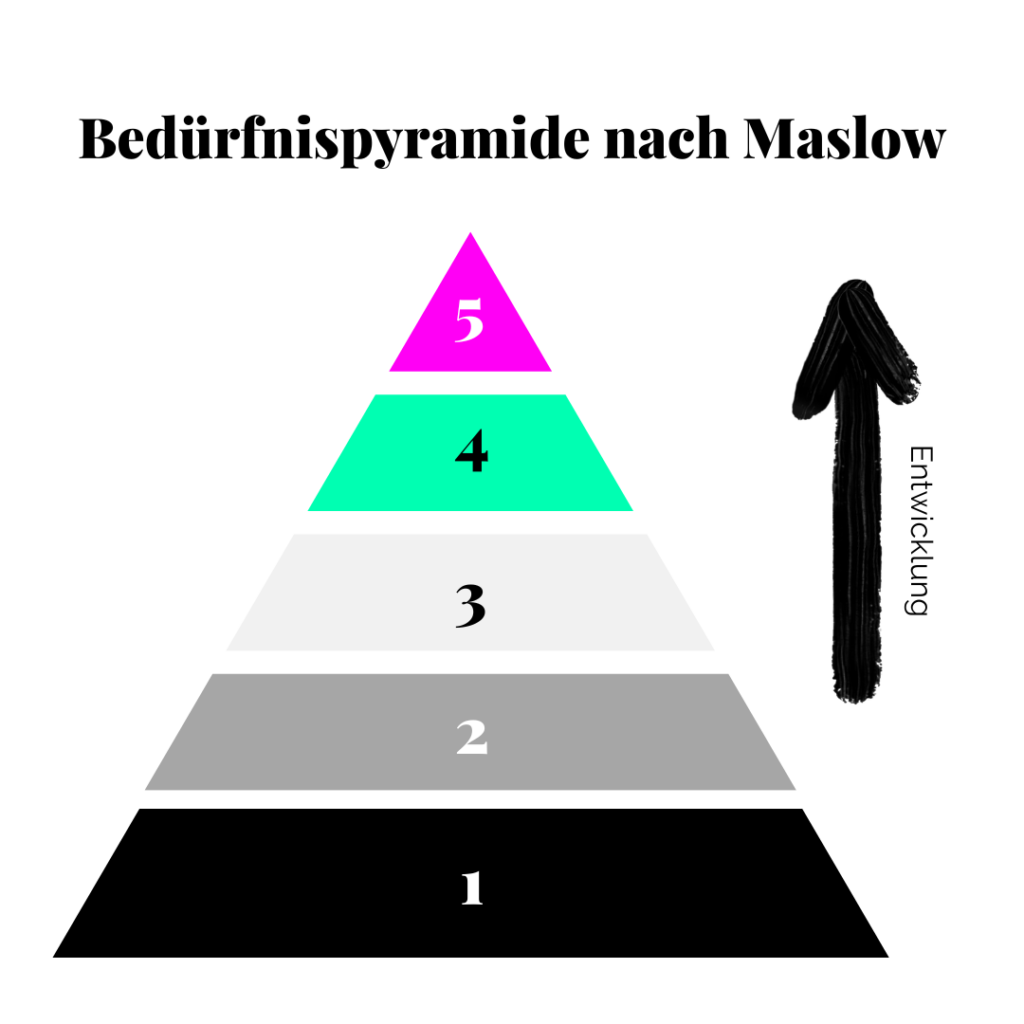
Newsletter marketing poses particular challenges for social media managers. They pay attention to numerous details in order to convert the selected email recipients into readers. Besides design and layout, there is a simple trick that helps to turn standalone recipients into customers. What is this so-called secret tip of the ONELINE based on? On Maslow’s pyramid of needs. It depicts people’s needs in five levels.
- Physiological needs: Food, drink, sleep
- Safety needs: Security and protection of oneself, health.
- Social needs: interpersonal relationships and a sense of belonging
- Need for esteem: recognition and status
- Need for self-realisation: development of the personality
For advertisers, it is worthwhile to include one of these levels in the newsletter. Why should readers read through an electronic advertising letter and possibly take advantage of the offer if it does not fulfil any of their needs? Thus, target group selection is not the only factor, but also the level of Maslow’s pyramid of needs.
How to address the needs of the recipients
A newsletter that addresses sleep problems and insomnia will be well received by the right target group. However, the subject line should not contain empty promises. Furthermore, readers should have the feeling that they are not alone – with their sleep problem. Empathy and emotionality play an important role in meeting basic needs. The same applies to the other physiological needs – such as food and drink.
External newsletters that address safety needs are also growing in popularity. This can be the security system for one’s own home. In addition, products and services that address the desire to maintain one’s health can also be addressed. Stage two of the pyramid of needs can also be wonderfully combined with emotions. Online seminars and events score points for their versatility. Because they can satisfy the need for a sense of belonging, appreciation and self-fulfilment. Such standalone campaigns are suitable for people who want to create the best possible version of themselves. Emotionality therefore also plays a decisive role here. Companies that include one or more levels of Maslow’s pyramid of needs in their content increase their chances of success. Their readers convert them into customers. However, the offer that the standalone newsletter promotes should be unique and stand out from the competition. Otherwise, companies will encounter disinterested and annoyed readers.